
Nyheter
Tornado Cash Banned in the US, Game dApps Thriving, and More!

Bitcoin barely moved over the past seven days while Ethereum saw an increase in price by 4.9%. Avalanche recorded a 21.31% increase week-over-week, following its listing on Robinhood on August 8 alongside Stellar. Other outliers from this past week are Chainlink and Polkadot, each recording an increase of 19.7% and 16.27% respectively, in addition to Binance Coin whose price increased by almost 14%; all on the back of developments which we will delve deeper into further in this newsletter.
Key Takeaways
• New bipartisan bill wants to hand jurisdiction over BTC and ETH to CFTC
• Wallet addresses holding 100 ETH or more increase ahead of Merge
• USDT, FRAX to honor redemptions on new POS ETH chain, won’t support POW fork
• Gaming dApps account for 60% of all blockchain activity in July
• Multiple ETHPOW forks are expected to launch post-merge
Macro, Regulations; Spot, and Derivatives Markets
Bank of England raised interest rates to 1.75% in the biggest increase since 1995, while estimating inflation to peak at 13.3% in October. July’s US inflation data is scheduled to be released on August 10 and the next Federal Reserve meeting is slated to take place on September 21.
In its earnings report, Microstrategy reported a $918M impairment charge on its Bitcoin holdings in Q2, compared to $414.2M for Q2 of 2021. On the back of that news, former CEO of Microstrategy Michael Saylor stepped down to assume the role of executive chairman to focus primarily on innovation and long-term corporate strategy, while continuing to provide oversight of the Microstrategy’s Bitcoin acquisition strategy as head of the Board’s Investments Committee.
A new bipartisan legislation wants to hand the regulatory authority over Bitcoin and Ethereum to the Commodities Futures Trading Commission (CFTC). There has been a long dispute in Congress over whose place it is to regulate cryptoassets, the Securities and Exchange Comission (SEC) or the CFTC. The Digital Commodities Consumer Protection Act of 2022 grants the CFTC ”exclusive jurisdiction” over cryptocurrency trades that meet commodities law. Aiming to bring more clarity into the space, the bill aims to introduce a new term “digital commodity,” leaving it up to the CFTC to define.
The SEC charged 11 people linked to Forsage for fraud, calling the decentralized smart contracts platform a textbook pyramid scheme. A few days later, documents were leaked to the public showing that the SEC had open cases on all US-based crypto exchanges, along with Binance. More law enforcement that took place last week:
• New York State Department of Financial Services marked its first crypto law enforcement action by fining Robinhood $30M for violating cybersecurity and AML laws, an event the company has been expecting since last year.
• Celsius is facing a lawsuit from over 300 of its custody clients claiming rightful ownership of $180M of firm’s assets locked in bankruptcy proceedings.
• Portuguese banks closed accounts of crypto exchanges, on the back of “suspicious transactions.”
Senator Elizabeth Warren of Massachusetts wants Office of the Comptroller of the Currency to rewrite guidelines permitting banks to hold reserve-backed stablecoins like USDC and USDT. Meanwhile, the European Central Bank called stablecoins and Bitcoin problematic while calling central bank digital currencies a “holy grail” for cross-border payments in a report published earlier this month.
On-chain Indicators
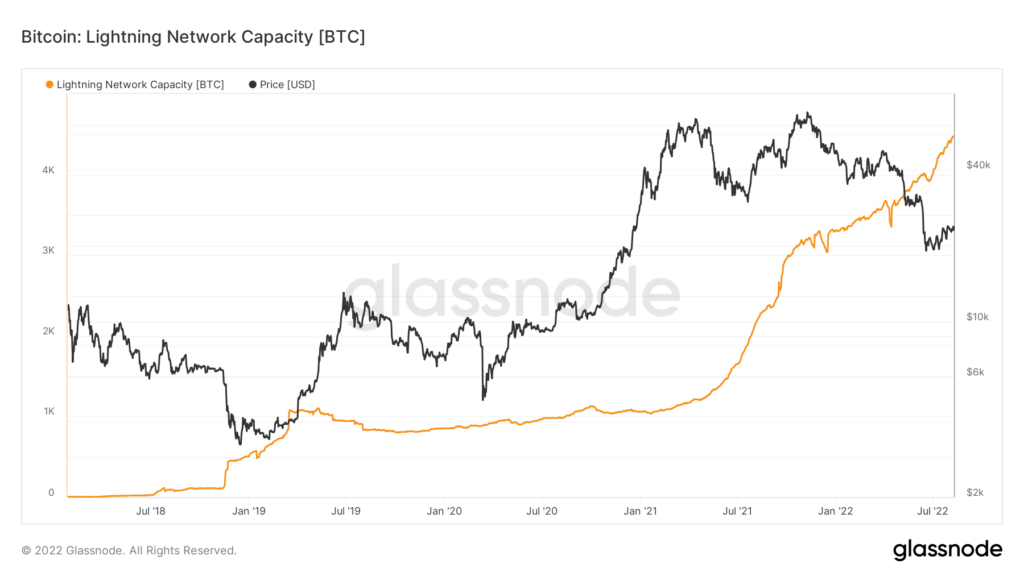
Figure 1: Lightning Network Capacity
Source: Glassnode
The Lightning Network, which allows for near-instant transaction finality, has almost 4.5K BTC in its capacity, which means over $100M are ready for peer-to-peer payments on the Bitcoin blockchain network. That is 500 more BTC since June.
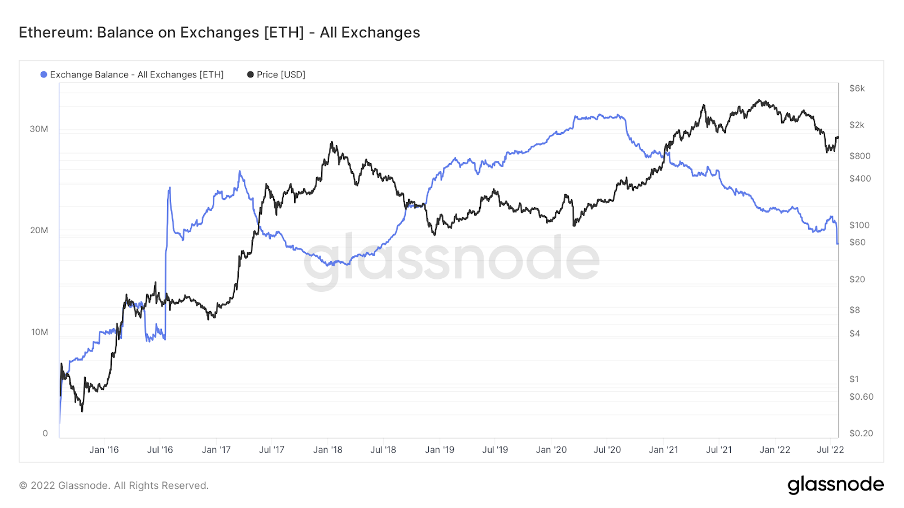
Figure 2: Addresses with 100 ETH or more
Source: Glassnode
Ethereum is leaving 2018 levels in terms of wallets holding 100 ETH or more. Over the past week, wallets holding 100 ETH or more have increased by more than 200.
Media Coverage
Our Director of Research Eliezer Ndinga was featured on Blockworks to talk about price developments and market sentiment. You can read more here.
In other news, our very own research associate Carlos Gonzales was featured on Forbes to discuss Litecoin. You can read more about it here.
Last but not least, we’re thrilled to welcome Sherif El-Haddad as 21Shares’ first Head of Middle East Sales as we expand into new markets. You can read more here.
News
Tornado Cash Just Got Banned in the US
What happened?
The US Department of Treasury banned Tornado Cash, a decentralized protocol used to obfuscate the trail of transactions for privacy, for facilitating the laundering of the proceeds of cybercrimes, according to the statement. The US Treasury said that Tornado Cash has been used to launder more than $7B worth of cryptoassets since it launched in 2019. That figure amounts to the total value of cryptoassets that have been sent through Tornado Cash since launch.
Why does it matter?
The move comes after the US Treasury linked the $600M+ Ronin Bridge exploit to North Korean cybercriminal Lazarus Group, which sent approximately $80.3M worth of ETH through Tornado Cash, according to blockchain analytics firm Elliptic.
Back in July, Chainalysis revealed that 10% of all funds coming from illicit addresses are sent to crypto mixers, such as Tornado Cash and Blender.io which has been recently sanctioned earlier by the US on the back of the infamous Axie Infinity hack.
Tornado Cash announced in April that it’s using Chainalysis’ oracle contracts to block wallet addresses sanctioned by the US. ”Maintaining financial privacy is essential to preserving our freedom; however, it should not come at the cost of non-compliance,” said the Tornado Cash team.













Nyheter
HANetf blir den största ETF-utgivaren på Warszawabörsen, med 8 nya UCITS ETF-noteringar och fler på gång


Defiance utökar sitt europeiska utbud med lanseringen av Europas första minnes-ETF

KBOT ETF investerar i humanoida robotar

HANetf blir den största ETF-utgivaren på Warszawabörsen, med 8 nya UCITS ETF-noteringar och fler på gång

ASWA ETF ger exponering mot kärnbränsle- och energiindustrin

Nya ETF- och ETP-noteringar den 19 juni 2026 på Deutsche Börse

USA satsar 2 miljarder dollar på kvantdatorer – så kan investerare dra nytta av utvecklingen

Extrema skillnader: Varför presterar Europas kvantdator-ETFer så olika?

QQCC ETF följer företag världen över som är aktiva inom kvantberäkning

Fastställd utdelning i MONTDIV maj 2026

Varför Plus500 är en dröm för finans-affiliate
-
 Nyheter4 veckor sedan
USA satsar 2 miljarder dollar på kvantdatorer – så kan investerare dra nytta av utvecklingen
-
 Nyheter2 veckor sedan
Extrema skillnader: Varför presterar Europas kvantdator-ETFer så olika?
-
 Nyheter3 veckor sedan
QQCC ETF följer företag världen över som är aktiva inom kvantberäkning
-
 Nyheter4 veckor sedan
Fastställd utdelning i MONTDIV maj 2026
-
 Nyheter3 veckor sedan
Varför Plus500 är en dröm för finans-affiliate
-

 Nyheter3 veckor sedan
ETFer för fotbolls-VM 2026
-

 Nyheter3 veckor sedan
21shares produkter nu finns tillgängliga hos Revolut
-

 Nyheter5 dagar sedan
Den osynliga flaskhalsen i AI-boomen: Varför elinfrastruktur är nästa stora megatrend
