
Nyheter
What is Solana used for? The blockchain of choice for retail users and tech builders

Solana is a high-performance blockchain built for speed, scale, and real-world usability, making it one of the most compelling platforms for cross-border payments and beyond.
With transaction fees as low as $0.0025 and sub-second finality, Solana enables frictionless transfers of any size, be it $1 or $100 million, at a fraction of the cost and time of traditional systems. Its performance has attracted global payment leaders like Visa, Stripe, and Shopify, all of which integrate Solana’s infrastructure to power stablecoin payments, institutional settlements, and retail checkouts.
Solana’s use cases extend far beyond payments. As we’ll explore, it’s become the builder’s chain of choice for decentralized finance (DeFi), AI agents, real-time apps, and physical infrastructure networks, underpinning a new internet where cost and speed are no longer trade-offs.
Cross-border payments
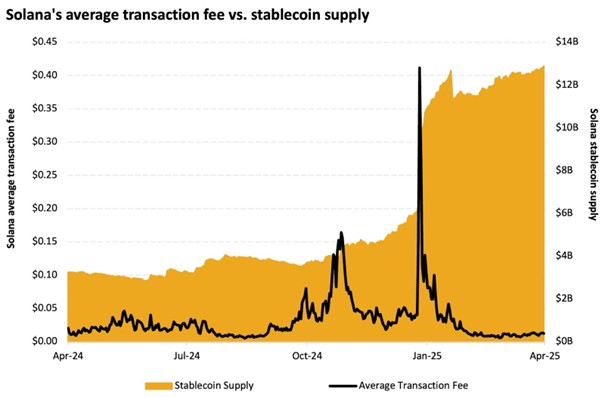
Stablecoin adoption on Solana has surged nearly 6x in under a year, skyrocketing from $2.16 billion in early 2024 to over $12 billion by early 2025. This explosive growth is fueled by Solana’s ability to process near-instant transactions at ultra-low costs, with average transaction fees hovering around $0.0025, often at a fraction of a cent, even during peak network activity. Whether moving $1 or $100 million, transaction fees remain negligible, making Solana the go-to blockchain for cross-border payments, institutional transfers, and everyday transactions.
User-friendly experience
To complement the growing adoption across both traditional institutions and crypto-native sectors, Solana is prioritizing user experience through intuitive design and technical advancements. By making blockchain interactions as seamless as Web2 applications, Solana is eliminating barriers to entry and driving greater accessibility for new users.
For starters, Solana Blinks enables seamless blockchain transactions through QR code scans on social media, allowing users to engage effortlessly in a familiar setting, without even realizing they’re interacting with blockchain technology. Meanwhile, Solana Pay lets merchants cover transaction fees for customers, removing the need to hold SOL and making digital payments effortless. As a final example, the Solana Saga & Sleeker smartphones integrate Web3 functionality directly into handheld devices, bringing blockchain technology quite literally to users’ fingertips.
By reducing friction and enhancing usability, Solana is setting the gold standard for mainstream crypto adoption, which is clearly accelerating across the vast ecosystem it boasts, which will now be explored in more detail.
The builder’s blockchain
Solana is emerging as the top blockchain for innovative tech, with an 83% growth in developers in 2024. This growth is fueling innovation in AI and decentralized infrastructure industries that rely on fast, low-cost networks for real-time interactions. For the first time ever, Ethereum has been surpassed in new developer growth, with Solana’s developer base expanding 83% in the past year.
As of writing, the Solana network has recorded 365 billion transactions through a vibrant ecosystem composed of more than 400 applications in various sectors, mainly decentralized financial services, and crypto art and games. The use of Rust over EVM-compatible Solidity as the core programming language has been identified as one of the key constraints for developers building on Solana.
To facilitate ecosystem growth, the Solana Foundation hosts annual hackathons. For instance, the “Radar” hackathon took place in November 2024, encouraging participants to build the next breakout crypto startup. There were over 10,00 participants from over 120 countries, with 1,359 project submissions competing for a grand prize of $50,000 USDC, demonstrating the interest and strength of the growing community and continued developer support. As a result, Solana became the #1 ecosystem for new developers in 2024, overtaking Ethereum, which had occupied this place since 2016, according to Developer Report.
Rapid adoption across industries
Solana is rapidly becoming the go-to blockchain for emerging sectors, largely driven by an unprecedented talent influx and high-performance infrastructure.
This wave of builders is fueling breakthrough innovations in DePIN and AI, two sectors that demand high-speed, low-cost networks for frequent real-time interactions.
The migration of Render Network from Ethereum underscores this shift, as the project now leverages Solana’s architecture for decentralized, GPU-powered rendering services. Meanwhile, more than half of all AI agents are now launching on Solana, thanks to frameworks like Eliza and ARC, which simplify the deployment of AI-powered agents for real-time automation and decision-making.
Notably, Eliza has attracted many developers, with its open-source code on GitHub being used 4,200 times. The rapid surge in AI agents earlier this year highlights how these industries are driving significant on-chain activity, further solidifying Solana as the platform of choice for experimental and high-growth use cases. As innovation accelerates, Solana’s scalability and developer momentum are setting the foundation for the next wave of decentralized applications, which will be explored further as we break down Solana’s ecosystem.
Decentralized Physical Infrastructure Networks (DePIN) represent an emerging crypto subsector focused on outsourcing and optimizing physical resources through decentralized systems. Solana powers DePINs like Helium (broadband), Hivemapper (mapping), and Render (3D rendering), which demand high-speed, low-cost transactions at scale. Solana’s fast and efficient blockchain provides the necessary infrastructure for these applications to operate smoothly and cost-effectively.
Over the past years, Solana has garnered partnerships with legacy players like PayPal and Visa. In 2024, Solana forged integrations with Shopify and Stripe on the retail side and Franklin & Templeton and Hamilton Lane on the institutional side. Solana must address network reliability issues to deepen its integration with traditional finance, especially as its network experienced downtime once in 2024 and multiple times over the past four years. Coming soon on Solana’s mainnet, the Firedancer validator client is a solution developed by Jump Crypto, positioned to reduce outages. On testnet, Firedancer was capable of processing over 1 million TPS and is anticipated to enhance network reliability, solidifying Solana’s role as a top solution.
Research Newsletter
Each week the 21Shares Research team will publish our data-driven insights into the crypto asset world through this newsletter. Please direct any comments, questions, and words of feedback to research@21shares.com
Disclaimer
The information provided does not constitute a prospectus or other offering material and does not contain or constitute an offer to sell or a solicitation of any offer to buy securities in any jurisdiction. Some of the information published herein may contain forward-looking statements. Readers are cautioned that any such forward-looking statements are not guarantees of future performance and involve risks and uncertainties and that actual results may differ materially from those in the forward-looking statements as a result of various factors. The information contained herein may not be considered as economic, legal, tax or other advice and users are cautioned to base investment decisions or other decisions solely on the content hereof.








Nyheter
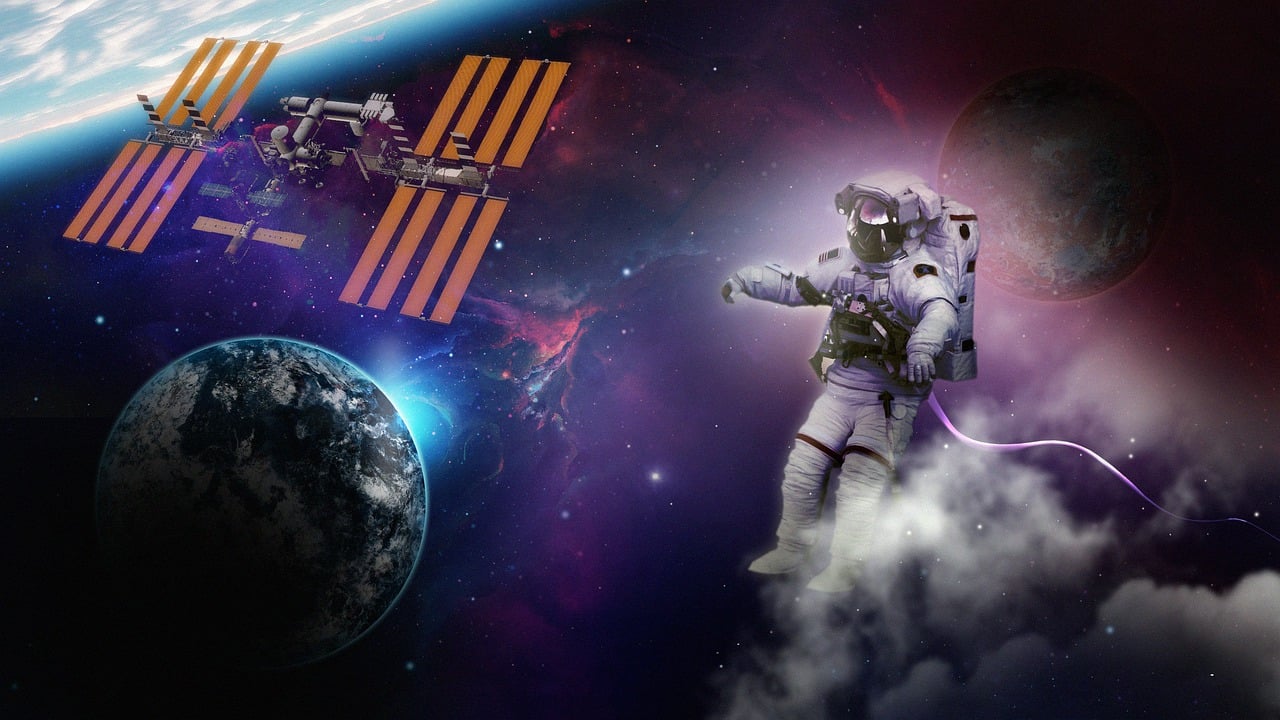
BlackRock lanserar ST4R ETF för att erbjuda snabb tillgång till möjligheter inom rymdekonomin

Nya ETF- och ETP-noteringar den 9 juni 2026 på Deutsche Börse

UONS ETF spårar den amerikanska dagslåneräntan

BlackRock lanserar ST4R ETF för att erbjuda snabb tillgång till möjligheter inom rymdekonomin

DJIW ETF investerar i Sharia-kompatibla globala företag utanför USA

Nya ETF- och ETP-noteringar den 8 juni 2026 på Deutsche Börse

USA satsar 2 miljarder dollar på kvantdatorer – så kan investerare dra nytta av utvecklingen

De bästa ETFerna för att investera i emerging markets

Fastställd utdelning i MONTDIV maj 2026

Varför Plus500 är en dröm för finans-affiliate

Extrema skillnader: Varför presterar Europas kvantdator-ETFer så olika?
-
 Nyheter2 veckor sedan
USA satsar 2 miljarder dollar på kvantdatorer – så kan investerare dra nytta av utvecklingen
-
 Nyheter3 veckor sedan
De bästa ETFerna för att investera i emerging markets
-
 Nyheter3 veckor sedan
Fastställd utdelning i MONTDIV maj 2026
-
 Nyheter1 vecka sedan
Varför Plus500 är en dröm för finans-affiliate
-
 Nyheter1 vecka sedan
Extrema skillnader: Varför presterar Europas kvantdator-ETFer så olika?
-

 Nyheter3 veckor sedan
ASWF ETF är en aktivt förvaltad fond som investerar i Kanada
-

 Nyheter2 veckor sedan
21shares produkter nu finns tillgängliga hos Revolut
-

 Nyheter2 veckor sedan
Olja och Hormuzsundet fick flest sökningar i maj 2026
